


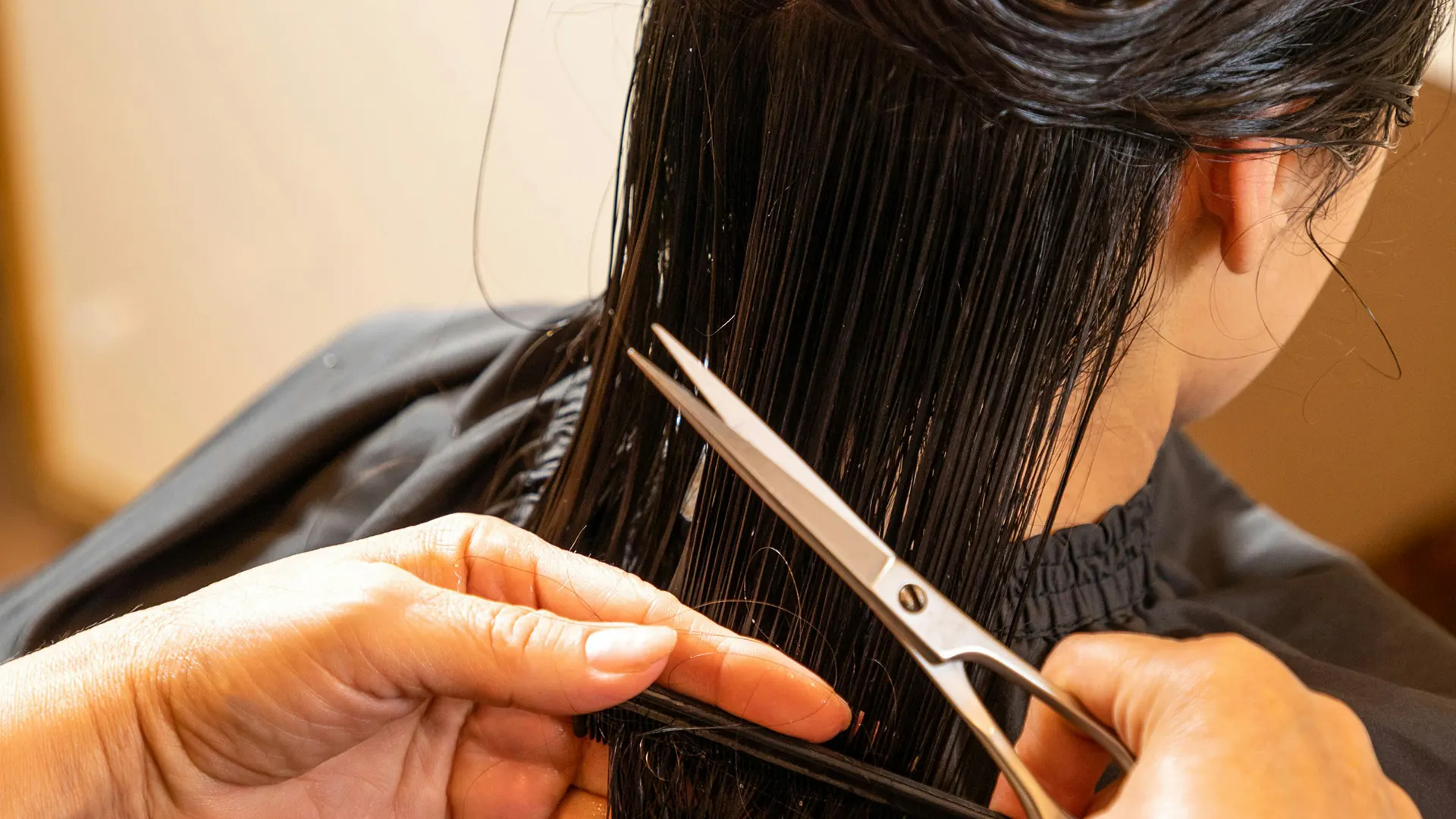
Many people schedule trims hoping their hair will immediately feel healthier again. Sometimes trimming the ends helps, but other times the hair needs deeper support. This article explains when a damaged hair treatment may be more beneficial than simply removing length.
A haircut can improve the appearance of damaged hair, but trimming alone does not always solve the underlying issue.
Sometimes the hair itself needs moisture, strengthening support, or cuticle repair in addition to removing split ends.
Understanding the difference helps people make better decisions about maintaining healthy hair long term.
Split Ends Are Not the Only Sign of Damage
People often associate damage only with visible split ends. In reality, hair can be compromised long before severe splitting appears.
Other common signs include:
- Rough texture
- Excessive tangling
- Dullness
- Loss of elasticity
- Increased frizz
- Hair that feels weak when wet
These issues often point toward the need for a professional damaged hair treatment rather than only shortening the hair.
Why Hair Sometimes Still Feels Dry After a Trim
A trim removes compromised ends, but it does not necessarily restore moisture or internal strength throughout the hair shaft.
Hair that has experienced:
- Repeated heat styling
- Blonding services
- Chemical processing
- Hard water exposure
- Sun exposure
may require additional support to improve softness and manageability.
This is where targeted treatments can help.
Damaged Hair Treatment Options Work Differently
Not all treatments focus on the same goal.
Some treatments prioritize:
- Moisture balance
- Protein support
- Bond reinforcement
- Cuticle smoothing
- Scalp health
The right approach depends on the condition of the hair itself.
For example, overly brittle hair may require strengthening support, while rough, dehydrated hair may respond better to moisture-focused treatments.
Breakage Often Gets Mistaken for Slow Growth
Many people believe their hair “will not grow,” when the issue is actually breakage.
Hair can continue growing from the scalp while still appearing shorter because damaged ends keep snapping off.
A professional damaged hair treatment plan often focuses on preserving length by improving overall hair integrity.
Healthy Hair Usually Feels More Consistent
Hair that needs deeper support often feels inconsistent from root to ends.
You may notice:
- Smooth roots but rough mids and ends
- Uneven shine
- Dryness immediately after washing
- Difficulty holding style
- Increased static or puffiness
These signs often indicate the hair structure needs support beyond cutting alone.
Prevention Matters More Than Repair
Treatments work best when they become part of ongoing maintenance instead of only emergency repair.
Simple habits make a major difference:
- Lower heat settings
- Heat protection
- Regular trims
- Hydrating products
- Reduced overprocessing
- Professional maintenance schedules
Consistency usually protects hair more effectively than occasional intensive repair alone.
Key Takeaways
A haircut can improve the appearance of damaged hair, but sometimes the hair requires more comprehensive support.
Professional damaged hair treatment services can help improve moisture balance, strength, softness, and overall manageability while supporting healthier long-term hair condition.
Thoughtful Hair Treatments often work best alongside regular trims rather than replacing them entirely.


View comments
+ Leave a comment